STS2DB

Home › Characters

Slay the Spire 2 Characters

Early Access has five playable characters. This overview explains what each one asks you to manage and the order in which the roster unlocks.
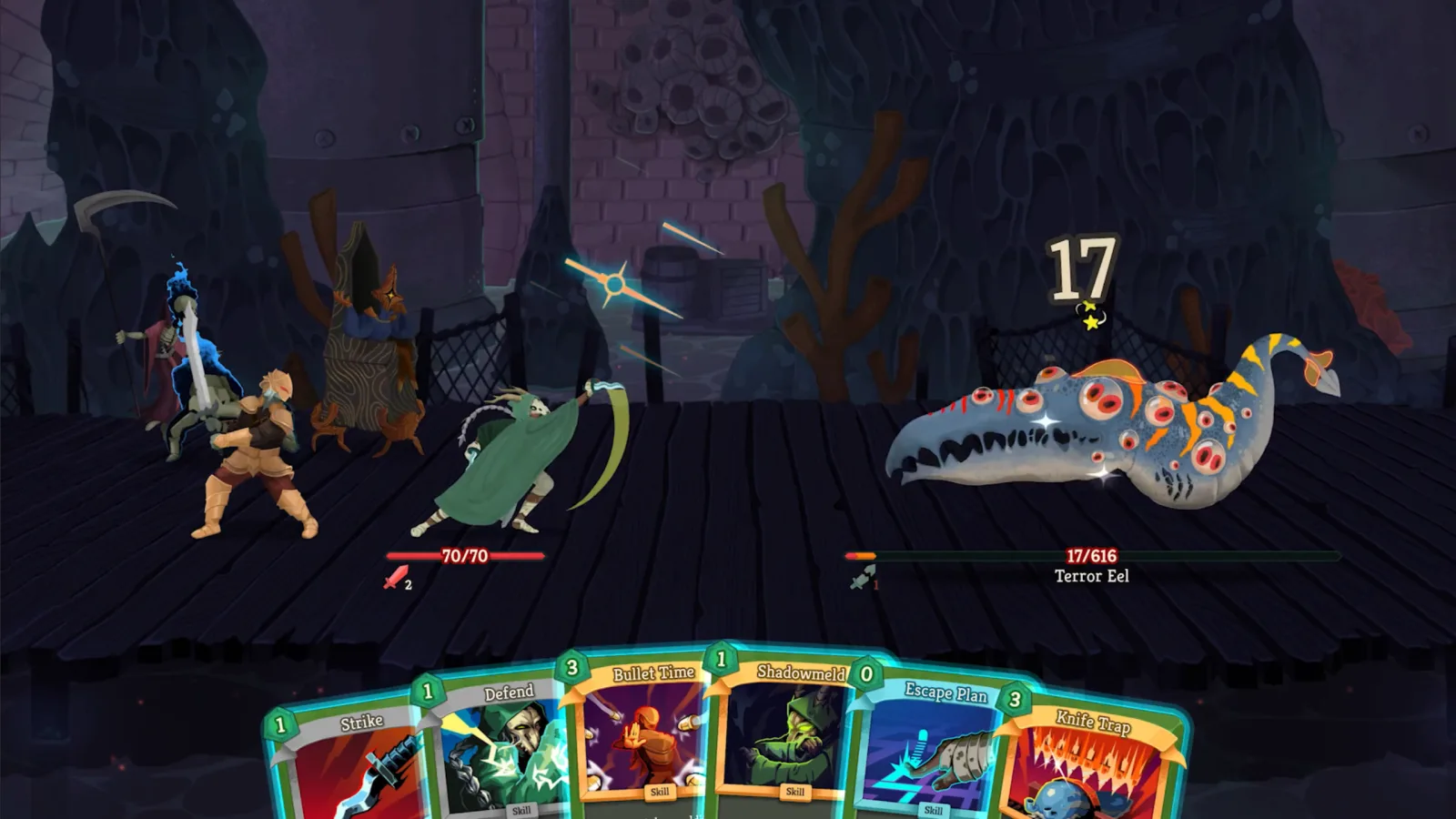
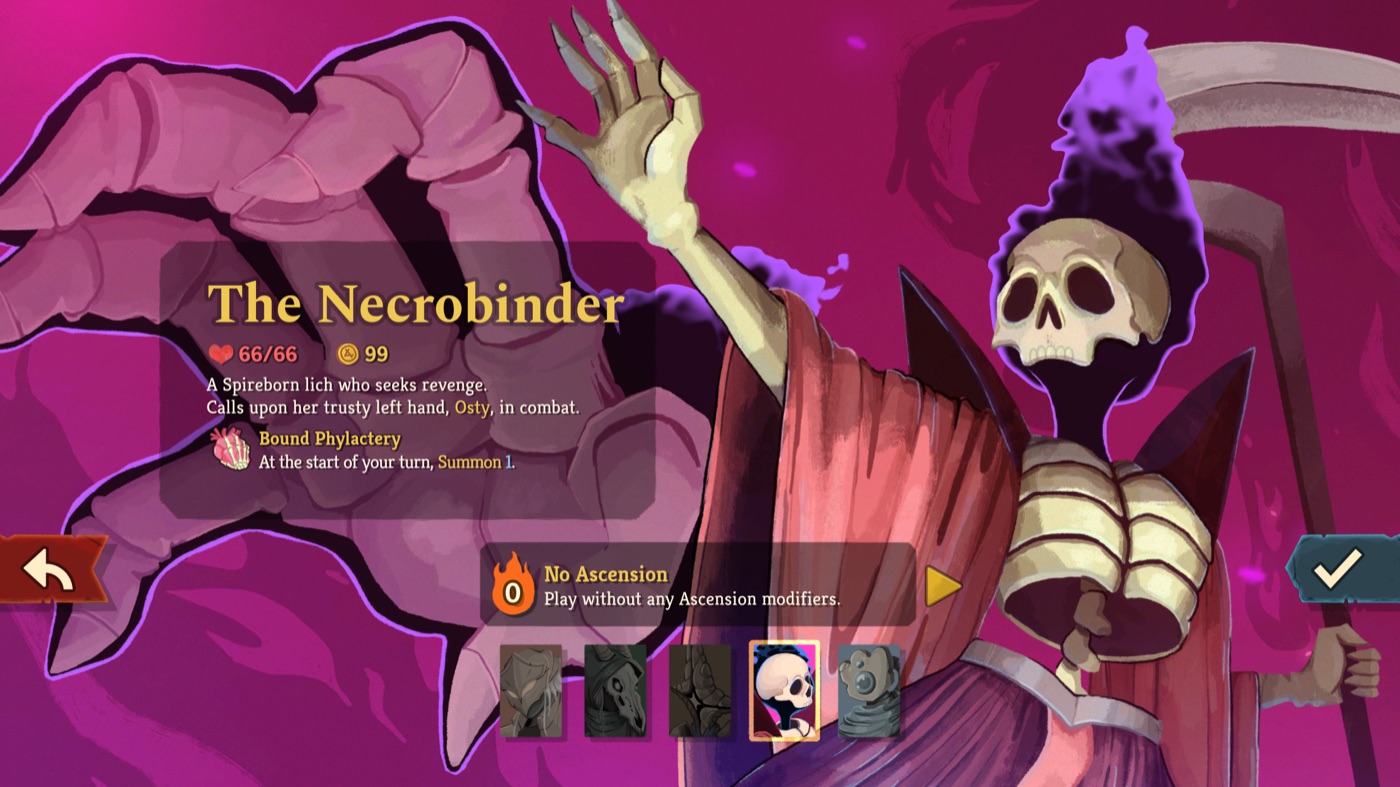
Necrobinder selected on the Slay the Spire 2 character screen
Official character-select screenshot. Source: Mega Crit press kit

Roster at a glance

CharacterUnlockBase HPCore mechanic
Ironclad
Returning
Available at start 80 Strength, heavy attacks, self-damage, Exhaust
Silent
Returning
Complete a run with Ironclad 70 Poison, Shivs, draw, discard, Sly cards
Regent
New
Complete a run with Silent 75 Stars, Forge, Sovereign Blade, created cards
Necrobinder
New
Complete a run with Regent 66 Summon, Osty, Souls, Doom, Ethereal cards
Defect
Returning
Complete a run with Necrobinder 75 Lightning, Frost, Dark, Plasma, Glass Orbs, Status / Fuel

Character unlock order

The order is Ironclad → Silent → Regent → Necrobinder → Defect. Completing a run with the current character unlocks the next one; the run does not have to be a win. That progression introduces the two new characters before returning to the Defect's Orb system.

Choose a character guide

Ironclad fighting beside Silent in an official Slay the Spire 2 co-op screenshot Returning

Ironclad

Ironclad has the most forgiving health economy, but good runs still solve damage before they start collecting late-game scaling pieces.

Build packages: Vulnerable pressure · Exhaust–Block engine · Self-damage Strength

Open the full guide →
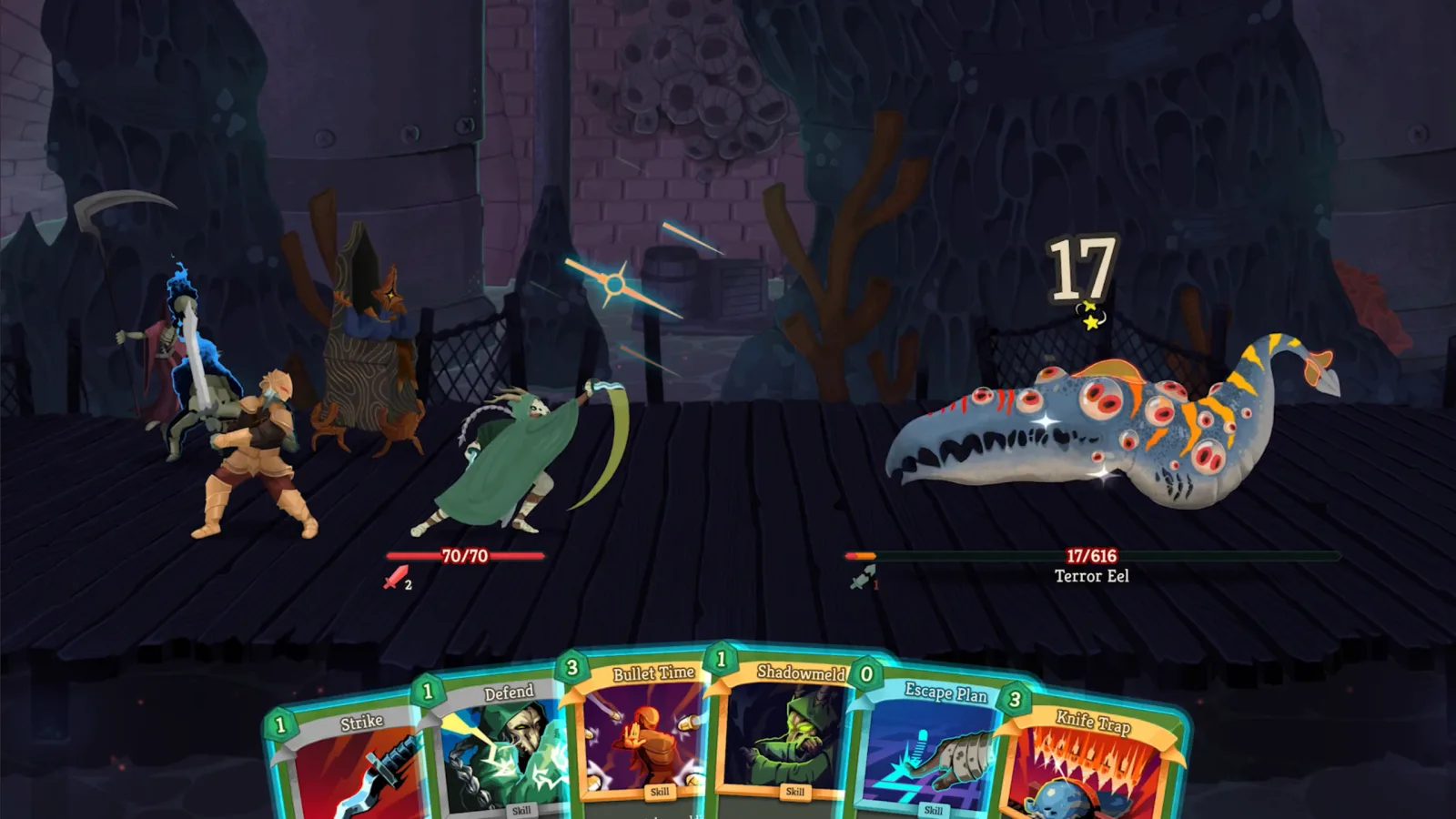
Silent attacking the Terror Eel in an official Slay the Spire 2 co-op screenshot Returning

Silent

Silent wins by turning card flow into cleaner turns. Poison and Shivs are payoffs; draw, discard, defense, and reliable front-loaded damage make them work.

Build packages: Sly discard loop · Poison with a defense shell · Shiv multi-hit

Open the full guide →

Regent in armor near the foreground of the official Slay the Spire 2 key art New

Regent

Regent is a resource planner. A clean deck knows whether Stars, Forge, or created cards are solving the next fight instead of taking every card with the same keyword.

Build packages: Stars burst · Sovereign Blade loop · Card-creation engine

Open the full guide →
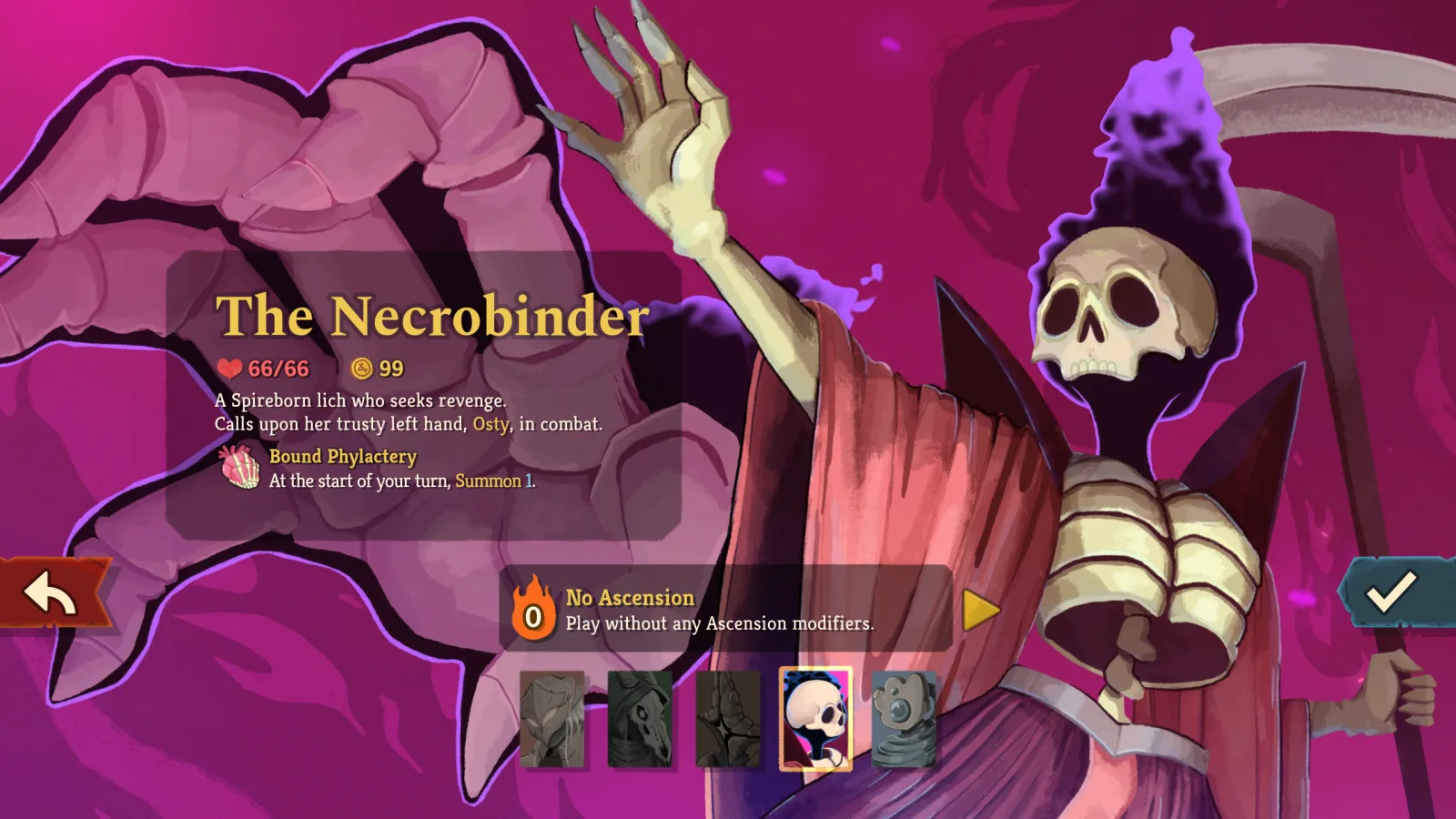
Necrobinder and Osty on the official Slay the Spire 2 character selection screen New

Necrobinder

Necrobinder plays two health bars and several delayed resources at once. The trick is deciding whether Osty is your shield, your damage engine, or something you are willing to spend.

Build packages: Osty Summon · Doom control · Soul and Ethereal

Open the full guide →
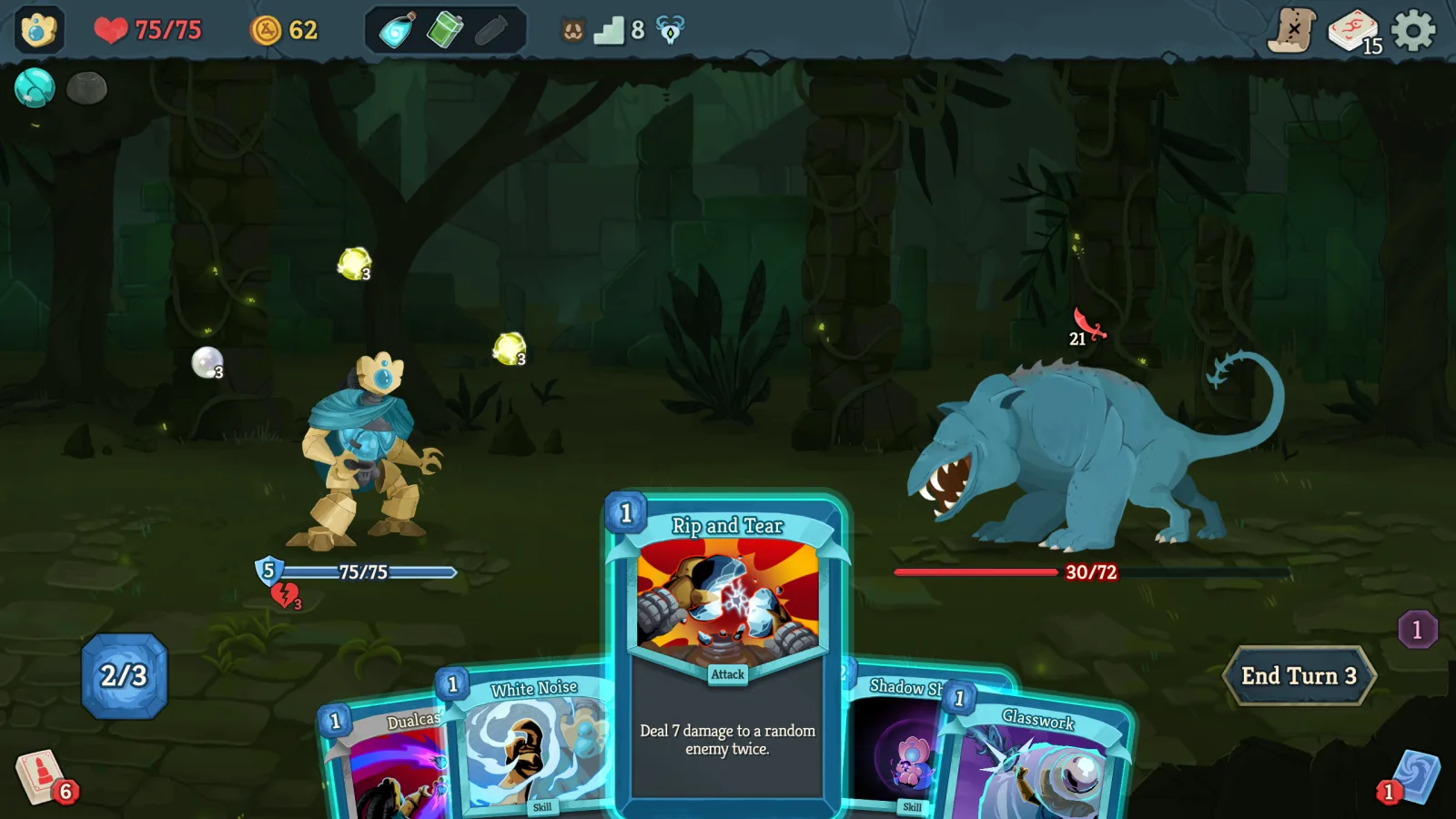
Defect channeling Orbs in an official Slay the Spire 2 combat screenshot Returning

Defect

Defect can win with Orbs, Status fuel, or cheap card loops. The common failure is drafting a little of every engine and never completing one resource chain.

Build packages: Mixed Orbs and Focus · Status to Fuel · Claw zero-cost recursion

Open the full guide →

Which character should a new player use?

These are mechanical starting points, not a fixed tier list. Early Access balance changes, the cards offered during a run, and the current map matter more than forcing a preselected archetype.

15 build decision guides

These are conditional packages, not fixed tier-list promises. Open the guide when you want to know when a direction is real, what job its cards perform, and when to stop forcing it.

Ironclad Vulnerable pressure

Use Vulnerable as an Act 1 bridge when the deck can apply it and immediately cash it in with efficient attacks. A second Vulnerable source is a signal; it is not permission to stop drafting Block, draw, or front-loaded damage.

Open decision guide →
Ironclad Exhaust–Block engine

Exhaust is a plan when removing a card also produces Block, draw, damage, or a smaller deck that still has answers. Build the payoff side before spending the cards that keep the late fight alive.

Open decision guide →
Ironclad Self-damage Strength

Self-damage is good when it ends the relevant fight earlier or creates a decisive turn. Burning Blood softens the trade after combat; it does not protect you from the next attack or make a slow payoff safe.

Open decision guide →
Silent Sly discard loop

Build the deliberate discard trigger before filling the deck with Sly payoffs. Draw first when the card order allows it, then discard a card that is safe to lose while using the free-play window to solve the current fight.

Open decision guide →
Silent Poison with a defense shell

Take Poison when the deck can survive long enough for the clock to matter and can find or multiply the application. Early Poison is a bridge only if the rest of the deck can handle the next hallway and Elite.

Open decision guide →
Silent Shiv multi-hit

A Shiv plan needs both generators and a way to make repeated low-cost attacks scale. One generator is a useful attack; it becomes a direction only when Accuracy, Phantom Blades, a relic threshold, or another payoff gives the extra attacks a job.

Open decision guide →
Regent Stars burst

Stars are a bank, not a turn-end score. Keep them when the current hand has no good conversion; spend them when the burst turn solves a real damage, Block, or Energy problem and the Energy-plus-Stars cost is actually payable.

Open decision guide →
Regent Sovereign Blade loop

Forge is worth the space when the setup also helps the current fight or when retrieval, retention, and protection make the Blade reliably payable. A huge Blade in a deck that cannot draw or defend its setup is not a winning plan.

Open decision guide →
Regent Card-creation engine

Card creation becomes an engine when the generated cards pay for their hand and Energy cost. Start with a reliable creator and a creation payoff; then check whether the next fight has room for random value without losing stable Block or damage.

Open decision guide →
Necrobinder Osty Summon

Treat Osty as a stateful resource. Current HP, Max HP, summon frequency, and the next enemy threat matter separately. Preserving Osty is not always correct; spending him can be the best answer when it prevents lethal or secures a valuable fight.

Open decision guide →
Necrobinder Doom control

Doom is a timing tool. Strip Artifact when needed, reach the threshold with a plan for the enemy's remaining attack, and keep defending until the execution actually occurs. A doomed enemy can still be dangerous before the trigger resolves.

Open decision guide →
Necrobinder Soul and Ethereal

Start with a Soul generator and a payoff you can actually reach during the next fight. Ethereal is valuable when the deck controls the timing of the card and has enough draw or replay to turn the delayed resource into a second useful action.

Open decision guide →
Defect Mixed Orbs and Focus

Orb slots help only when the deck can fill and cycle them fast enough. Keep the Orb that solves the current job, place the row deliberately, and use temporary Focus when several passives or Evokes will benefit from the same turn.

Open decision guide →
Defect Status to Fuel

Status becomes useful when creation has a payoff and the hand has a chosen consumer. Compact can turn Status in hand into Fuel; Flak Cannon can spend the same problem for damage. Treat them as competing decisions, not a resource you count twice.

Open decision guide →
Defect Claw zero-cost recursion

Treat the first Claw as an investigation signal, not a build order. Commit when Feral, All for One, Hologram, or another reliable recursion line appears early enough to make repeated zero-cost attacks solve real fights.

Open decision guide →

Current beta mechanics to explore

Silent Well-Laid Plans

Full-hand retention in Beta v0.111.0, including the 2(1) Energy cost.

Silent Mirage

How the Poison-to-Block effect works after the Beta v0.111.0 Exhaust and upgrade changes.

Regent Pillar of Creation

Repeated card-creation triggers and the current 2(3) Block value.

Regent Regalite

The first-creation trigger and its breakpoint against Pillar of Creation.

Necrobinder Sacrifice

When converting Osty's Max HP into triple Block is worth losing him.

Learn the sequel's core rules

Build advice is easier to use once the timing rules are clear. The mechanics library covers resource loops and the edge cases most likely to cost a run.
RegentStars

Carry-over, dual costs and Radiate timing.

SilentSly

What counts as active discard—and what does not.

NecrobinderOsty & Summon

Current HP, Max HP and damage order.

DefectGlass Orbs

Decay, Focus and the right Evoke window.

Continue browsing

Cards & Relics

Versioned answers for individual game objects.

Multiplayer & Co-op

Party size, matchmaking, local play, and crossplay status.

Patch Notes

Current main and beta versions.